News
Updates from the 1st Recruitment Center of the Ground Forces of Ukraine.
Number of units available for return after AWOL expanded
A second chance to return to service: after AWOL, you can choose from more than 70 units.
Read MoreDate: 31 July 2026
Number of units available for return after AWOL expanded

Ukraine has expanded opportunities for servicemen who decided to voluntarily return to duty after unauthorized absence from their unit. Now participants in the special program can choose their further place of service among more than 70 military units.
This is about more than just returning to the military — it's also about the opportunity to continue service in a new team, in a desired direction, taking into account already acquired knowledge and practical experience. The list includes units of the Armed Forces of Ukraine, the National Guard, and the State Special Transport Service. At the same time, a serviceman can only choose a unit within the structure in which they previously served. Thus, through the 1st Recruitment Center, all units of the Armed Forces of Ukraine can be chosen.
Who can use the simplified return
The program applies to servicemen whose unauthorized absence from the unit was recorded no later than June 12, 2026, inclusive.
To participate, a report must be submitted by September 20, 2026, inclusive. After this deadline, it will no longer be possible to use this exact simplified return algorithm. So don't put off this moment — better to contact the 1st Recruitment Center now.
The number of slots for certain positions and service tracks may be limited, especially in popular combat and technological units.
Which units are available to choose from
The list includes units of various profiles, in particular:
- mechanized and motorized infantry brigades;
- assault and air assault units;
- marine infantry units;
- artillery brigades;
- unmanned systems units.
Available options include both well-known combat brigades and new unmanned systems units. In total, the official list includes more than 70 units ready to accept servicemen returning after AWOL (full list of units).
The units' needs aren't limited exclusively to combat professions. The military needs unmanned systems operators, drivers, riflemen, clerks, technical specialists, and servicemen with other skills.
Is the chosen position guaranteed
When submitting the report, a serviceman can indicate:
- desired unit;
- direction of further service;
- existing military specialty;
- civilian profession;
- previous experience;
- professional and practical skills.
The final decision on the specific position is made taking into account the needs of the chosen military unit. Recruiters match the serviceman's wishes with available vacancies and determine where their training will be most useful.
So the program provides the ability to state a desired position or direction, but this doesn't mean automatic assignment to any chosen vacancy. That's why, before submitting a report, it's advisable to clarify the unit's needs and the possibility of using a specific specialty.
How the return takes place
The main feature of the new mechanism is that a serviceman can arrive directly at the designated military unit. There's no need to go through the Military Law Enforcement Service or a reserve battalion as part of this procedure.
After submitting the report, the program participant receives support from a contact center. Specialists help complete the necessary stages and coordinate the return to service. The report can be submitted, in particular, through the 1st Recruitment Center of the AFU — for servicemen of the Armed Forces of Ukraine.
What support is restored
After official enrollment in the personnel of the new military unit, the serviceman has the following types of support restored, including:
- monetary;
- food;
- material;
- other types of support according to the established procedure.
In addition, for six months after enrolling such a serviceman, they cannot be transferred to another unit without their written consent. This makes it possible to settle into the new unit, undergo the necessary training, and continue service in the chosen team.
The expansion of the list of units effectively gives servicemen after AWOL the opportunity to start a new stage of service. A person can not just return to the military, but try to find a unit and direction that better matches their experience, training, and professional abilities.
Leave your application on the website of the 1st Recruitment Center
Submit Application
instagram
+380 800 503 696

German journalist from Welt visited the 1st Recruitment Center's stationary point in Dnipro
The Center's network of offices covers seven Ukrainian cities.
Read MoreDate: 19 June 2026
German journalist from Welt visited the 1st Recruitment Center's stationary point in Dnipro

Dnipro is increasingly becoming not just a major rear and logistics hub, but also a city where you can see how the very culture of military recruiting in Ukraine is changing. It was here, at the stationary point of the 1st Recruitment Center of the Ground Forces of the AFU, that a journalist from the German publication Welt recently visited, wanting to see with his own eyes how Ukrainian recruiting works beyond dry press releases and formal descriptions. The point in Dnipro itself operates on the grounds of the Central Railway Station, so that the 1st Recruitment Center, as a service helping a candidate choose a position, brigade, and go through the path to service with support at every stage, is closer to everyone. Note that currently this applies not only to civilians, but also to servicemen with AWOL status.
The stationary point in Dnipro opened in June 2025 as part of the expansion of the 1st Recruitment Center of the Ground Forces network. A full range of services is available here: professional consultations, selection of position and unit, help with passing the medical commission, psychological screening and case processing, and, since the start of the transformation, matters related to returning after AWOL. For the foreign journalist, this wasn't just a visit to another Ukrainian office, but a chance to see how, in a city living under the constant threat of shelling, a modern mechanism for bringing people into the military is being built.
The German reporter was met on-site by 1st Center recruiters. The conversation turned out frank and substantive: from what the candidate's path into the Ground Forces looks like today, to why it's critically important for Ukraine that people join the military not chaotically, but through professional recruiting. The guest was shown how the stationary point works, how initial communication with candidates proceeds, how positions are selected, and why for many people this exact format becomes a chance to end up not “somewhere in the system,” but in a specific unit.
The visit turned out to be not only professionally substantive for the German journalist, but also very “Dnipro-like” in atmosphere. During an air raid alert, the team caught several explosions in the city. This was another reminder for the guest that recruiting in Ukraine has long existed not in sterile peacetime conditions, but in the reality of a major war, where even a working meeting with the press can take place against the backdrop of sirens and distant strikes. It was exactly this contrast — between an ordinary conversation about vacancies, service, and choosing a future, and the sounds of war outside the window — that created that same powerful, almost documentary-like tension that journalists usually seek on their trips.
The journalist was particularly interested in live communication with people who come to the Center not out of curiosity, but with a specific intention to join the military. During the visit, he interviewed a candidate who, despite being removed from the military registry for unfitness, came in to process his paperwork. This story became one of the most powerful in the entire report, as it showed the main change happening today in Ukrainian recruiting: more and more people come not because they were “brought,” but because they themselves are looking for a way to be useful to their country. For the foreign observer, this was an important detail in understanding Ukrainian motivation in the war.
We want to emphasize that the Dnipro point is part of a broader system, introduced by Center chief Ruslan Furdylo, designed to make the path to service clearer, more humane, and more effective. The Center accompanies candidates from the first inquiry to full enrollment in the chosen unit, and among its regional offices, Dnipro holds an important place.
Representatives of the 1st Recruitment Center, after talking with the German journalist, didn't hide their humorous and hardworking mood. “We're lifting recruiting off its knees in Dnipro as best we can,” they commented on the outcome of the meeting. This phrase carries both self-irony and war fatigue, and at the same time a very precise sense of the moment. Because in fact it's about far more than just the work of another point at the station. It's about an attempt to build a new military culture, where a person has a chance to be heard, get a consultation, understand their own role in the military, and arrive there not by accident, but consciously.
In the end, the Welt reporter's visit to the Dnipro stationary point of the 1st Recruitment Center became more than just international attention to another Ukrainian unit. It was a moment when several important stories converged in a single frame: Ukraine during war, a city of sirens and explosions, recruiters working with people every day, and candidates coming to serve on their own initiative. It's from such stories that the new reputation of the Ukrainian military is built — not only on the front, but also in how it knows how to speak with the world and with future servicemen.
Leave your application on the website of the 1st Recruitment Center
Submit Application
instagram
+380 800 503 696
Transformation of Ukraine's Defense Forces: new contracts and conditions for returning from AWOL
On the President's instruction, a comprehensive transformation of military service has been launched
Read MoreDate: 13 June 2026
Transformation of Ukraine's Defense Forces: new contracts and conditions for returning from AWOL

The Ministry of Defense of Ukraine is launching a comprehensive transformation of military service. This includes introducing contracts with clearly
defined terms, a new monetary allowance system, guaranteed deferrals after contract completion, automated transfers
via the Army+ app, and an updated procedure for the return of servicemen from AWOL.
These changes are meant to make military service more predictable, understandable, and fair for both current servicemen and
for civilians deciding to join the Defense Forces. Special emphasis is placed on strengthening infantry and combat units,
which carry out tasks in the most difficult sections of the front.

Five key directions of the transformation
At the first stage, the new model covers “5 main directions”:
- introducing new contracts with clear service terms;
- increasing payments for servicemen;
- guaranteeing deferral after contract completion;
- automatic approval of transfer reports via Army+;
- a new mechanism for the return of servicemen from AWOL.
In effect, this isn't about a targeted update of individual procedures, but an attempt to change the very logic of military service: from uncertainty to clear terms, from complex bureaucracy to digital solutions, from flat-rate payments to differentiated compensation depending on risk and the nature of tasks.
The infantry-assault contract — the highest payments
A separate place in the new system is occupied by the “infantry-assault contract.” It's intended for servicemen who will serve as infantrymen, assault troops, combat medics, spotters, driver-mechanics, and other specialists, according to the lists of positions and military units approved by the Ministry of Defense.
For this type of contract, different service terms are set depending on the person's status:
- 14 months — for civilians;
- 10 months — for active servicemen;
- 6+ months — for military personnel who were discharged from service during the special period.

The average salary of a serviceman on the “infantry-assault contract” should be UAH 300,000 per month. The maximum amount is capped at up to UAH 460,000.
The payment system will consist of two parts: a base rate of UAH 20,000 and additional bonuses under the “10/20/40” principle. This principle is directly tied to the nature of the combat task.
The additional payments under the “10/20/40” principle provide for:
- UAH 10,000 per day — for carrying out tasks directly at combat positions at the platoon strongpoint level;
- UAH 20,000 per day — for participation in strike-search operations, including destroying small enemy groups, reconnaissance, evacuation, and retaking one's own positions;
- UAH 40,000 per day — for assault operations with forward advance.
Importantly, these additional rewards will apply not only to those who sign new contracts. They will also be available to servicemen who carry out combat tasks of holding and assaulting positions, remain at positions but haven't signed a new contract.
To confirm a serviceman's presence at a specific location at a specific time, a “mission control” system will be applied. This is meant to tie payments more closely to the actual performance of tasks.

If a serviceman on the “infantry-assault contract” is temporarily in the rear, on a business trip, or on leave, an additional UAH 10,000 will be added to the base rate. That is, the minimum amount in such a case will be from UAH 30,000 per month.
Combat contract: for operators, artillerymen, EW specialists, and other combat specialties
The second type is the “combat contract.” It's designed for servicemen who perform tasks in combat or near-combat positions.
Such specialties include UAV pilots, ground robotic system operators, electronic warfare specialists, artillerymen,
and other military specialists.
The term of the combat contract will be 24 months.

The amount of payments will depend on how close the serviceman is to the front line. The minimum level of monetary allowance is set at UAH 30,000 per month, the maximum — UAH 120,000 per month.
As with other contract types, payments consist of a base rate of UAH 20,000 and additional rewards for carrying out combat or special tasks.
The following additional monthly rewards are provided:
- UAH 30,000 — for management and support positions;
- UAH 50,000 — at command posts;
- UAH 100,000 — directly in combat.
If a serviceman on a combat contract is temporarily on a business trip or on leave, another UAH 10,000 is added to the base UAH 20,000. So the minimum they'll receive is UAH 30,000 per month.
If a serviceman on the “combat contract” performs tasks on the front line, the “10/20/40” principle will also apply to them, similar to the “infantry-assault contract.”
Basic contract: service outside combat units
The third type is the basic contract. It's intended for positions outside combat units and will be signed for 24 months.
The minimum payment for servicemen under this contract will be at least UAH 30,000 per month.
The payment formula is the same: a base rate of UAH 20,000 plus additional rewards depending on the tasks completed.
For rear-area service, a base of UAH 20,000 and a bonus of UAH 10,000 are provided. If a serviceman carries out combat tasks at headquarters, command posts, or takes part in combat operations, they may receive additional payments.
The maximum amount for the basic contract can reach up to UAH 120,000 per month, i.e., match the level of the combat contract. If a serviceman performs tasks on the front line, bonuses will be calculated using the logic of the “infantry-assault contract.”
The option to switch from a basic contract to a combat or infantry-assault one is also provided.
Additional rewards: prisoners, destroyed enemy, first contract, and wellness support
Separately, the Ministry of Defense determines additional monetary rewards for specific combat results.
Provided:
- UAH 100,000 — for each enemy taken prisoner;
- UAH 15,000 — for each enemy destroyed in close or small-arms combat.
For servicemen signing a contract for the first time, a one-time payment in the range of UAH 27,000–33,000 is provided. Its amount will depend on military rank.
In addition, once a year it will be possible to receive a wellness payment — from UAH 20,000.
For graduates of military educational institutions, a separate rule will apply: if after graduation they haven't yet served the mandatory term under their first contract, new contracts will be signed for a term no shorter than the one remaining.

Deferral after the contract: the longer the service, the longer the guarantee
One of the key changes is the emergence of a guaranteed deferral after completing a contract. Its logic is based on the principle: the longer a serviceman carried out combat tasks and the greater their total length of service, the longer the deferral will be.
For “6+,” “10,” and “14-month” contracts, a guaranteed base deferral of 6 months is provided. Its duration will then increase depending on combat experience and previous service:
- +3 months — for each month of carrying out combat tasks;
- +6 months — for each year of service since 2022 before signing the new contract;
- +1 month — for each year of service before 2022.
For example, if a civilian signed a “14-month contract” and spent 10 of those months on combat tasks, they'll receive the right to a three-year deferral.
Another example concerns an active serviceman. If they signed a “10-month contract,” spent 2 months of it on combat tasks, and before that had 2 years of service since 2022, they'll have the right to a two-year deferral. The formula consists of 6 months of guaranteed deferral, 6 months for combat tasks, and 1 year for prior service.
For “24-month contracts,” a base guaranteed deferral of 6 months is also provided. Additionally taken into account will be:
- +1 day — for each day of carrying out combat tasks;
- +1 month — for each year of service before 2022.
The total duration of the deferral will be determined by the combination of all grounds.

Return from AWOL: 100 days for a simplified procedure
A separate block of changes concerns servicemen whose unauthorized absence was recorded before the effective date
of the relevant Cabinet of Ministers of Ukraine resolution.
For them, the state is opening a temporary window for voluntary return to service under a new procedure. It will last 100 days from the effective date of the Cabinet of Ministers resolution.
At the first stage, the mechanism will be available to servicemen of:
- the Armed Forces of Ukraine;
- the State Special Transport Service of Ukraine.
The National Guard of Ukraine is to join this mechanism later.
Return will only be possible within the same structure from which the serviceman went AWOL. For example, if it's the AFU, then return is possible specifically to the AFU.
Verification of reports will be carried out digitally and will take no more than 7 calendar days.

Return to one of 55 units
The new mechanism also provides for the ability to choose a unit for return. It's about one of 55 units included in the list of the most effective according to the eBaly rating of the Delta situational awareness system. In the Ministry of Defense's announcement, this group is designated as the “TOP-50+ units.”
A report for return can be submitted in one of several ways:
- through the Army+ app;
- to the 1st or 2nd Recruitment Center of the AFU — for AFU servicemen only;
- directly to the chosen military unit — for the AFU and the State Special Transport Service of Ukraine.
For servicemen of the National Guard of Ukraine, the ability to submit a report via Army+ should become available in the coming days.
There's no need to contact the previous unit for return. The serviceman will receive support from the contact center at every stage — from submitting the report to arriving at the new duty station.
The Army+ app will also introduce an “En route” status, confirming the serviceman's return to service, including while passing through checkpoints.

Monetary and material allowances will be restored on the day the serviceman is enrolled in the new unit's roster. Food allowance will be restored immediately on the day of arrival at the military unit.
Another important guarantee: for 6 months after enrollment in the new unit, the serviceman cannot be transferred without their written consent.
Why these changes matter
The announced transformation matters not only for the army's personnel policy. It concerns a broader issue of trust between the serviceman
and the state.
Clear contract terms give a person an understanding of the period for which they're taking on obligations. Increased payments should better correspond to the level of risk, especially for those working on the front line. A guaranteed deferral after completing a contract creates a predictable prospect of returning to family and civilian life.

At the same time, the simplified mechanism for return from AWOL demonstrates that the state is trying not only to punish, but also to give a way back to those ready to resume service. Especially important is the right to choose one of the 55 designated units, digital verification of the report within 7 calendar days, and the guarantee of no transfer without written consent for 6 months.
The changes proposed by the Ministry of Defense can be seen as the first stage of a major overhaul of military service rules. They combine financial motivation, clear terms, digital tools, a new approach, and an attempt to resolve the complex issues of returning servicemen from AWOL.
The key idea of this transformation is to make service in the Defense Forces more understandable, fair, and manageable. For the state, it's a way to strengthen combat units. For servicemen — an opportunity to see not just duties, but concrete guarantees, terms, payments, and rules for further service.
Leave your application on the website of the 1st Recruitment Center
Submit Application
instagram
+380 800 503 696
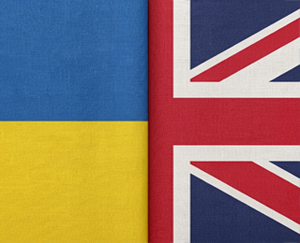
The Ambassador of the United Kingdom of Great Britain and Northern Ireland to Ukraine visited the 1st Recruitment Center
Foreign guests highly praised the work of the recruiters.
Read MoreDate: 12 June 2026
The Ambassador of the United Kingdom of Great Britain and Northern Ireland to Ukraine visited the 1st Recruitment Center

The 1st Recruitment Center of the Ground Forces of the AFU had the honor of hosting His Excellency Ambassador Extraordinary and Plenipotentiary of the United Kingdom of Great Britain and Northern Ireland to Ukraine, Neil Crompton, and Defence Attaché of the British Embassy in Ukraine, David Teasdale.
During the visit, the guests familiarized themselves with the Center's work, talked with representatives of key departments, and saw the candidate's full path — from the first inquiry to choosing a position and starting service.
The guests saw and highly praised the modern approaches to recruiting, psychological screening of candidates, international cooperation, and the implementation of information projects aimed at supporting future servicemen.
We are sincerely grateful to Great Britain for its unwavering support of Ukraine, help in the fight for freedom and independence, and consistent strengthening of partnership relations between our states.
Thank you to Ambassador Neil Crompton, Mr. David Teasdale, and the British delegation for the visit, open dialogue, and genuine interest in the development of the recruitment system of the Armed Forces of Ukraine.
Together — we're stronger.
🇺🇦 🇬🇧

How to choose a military education and become an AFU officer
Military Institute of Taras Shevchenko National University of Kyiv: education that shapes future officers.
Read MoreDate: 1 June 2026
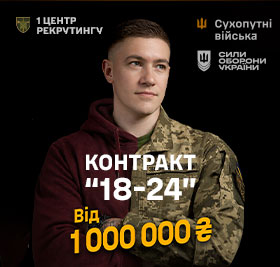
What you need to know about the “18-24 Contract” project
One contract - different opportunities for young people.
Read MoreDate: 4 May 2026
What you need to know about the “18-24 Contract” project
Ukraine continues developing a voluntary service format for young people that combines clear conditions, a short term, and understandable prospects after completion. This is the “18-24 Contract” project, implemented by the Ministry of Defense of Ukraine together with recruitment structures, including the 1st Recruitment Center.

The idea of the program is to give citizens aged 18 to 25 the opportunity to join the Armed Forces of Ukraine on clearly defined terms, without the long-term commitments typical of most contracts during martial law. At the same time, this isn't a “simplified” service, but full participation in the military system with corresponding training, workload, and responsibility.
One of the key features is the variability of conditions depending on the chosen specialty. For example, for rifle positions the contract lasts one year, while for unmanned systems operators — two years. This approach is explained by the difference in training complexity and the specifics of carrying out tasks. At the same time, in all cases participation in combat operations is provided — its duration is determined by the service track, but it remains a mandatory component.
Special attention within the program is paid to training. It's mandatory for everyone without exception and consists of several stages. The first is basic combined-arms training, which lasts 51 days. Then comes professional training in the chosen specialty — its duration depends on the track and can range from a few weeks to several months. The final stage is coordination within a unit, during which the serviceman integrates into the team and prepares to carry out real tasks.

The financial terms of the “18-24 Contract” have become one of the key factors attracting attention to the project. Payments depend on the position and duration of service, but on average provide for competitive monetary allowance. The payment provided by the program is one million hryvnias
Beyond the financial component, the program includes a number of social guarantees. After completing the contract, the serviceman has the right to discharge and receives a 12-month deferral from mobilization. There's also the option to travel abroad, access to free higher education under state quotas, and participation in preferential housing programs, including “eOselya.”
Another feature is the ability to choose. Candidates can independently determine not only their service track, but also the specific military unit, which significantly distinguishes this format from classic approaches to army recruitment. This allows better accounting of the motivation, skills, and interests of future servicemen.

In communications about the program, its main idea is often emphasized — “a short but intense experience.” In effect, this means the opportunity to gain real service experience, financial support, and a clear understanding of the next steps — both in the military sphere and beyond it — over a relatively short period.
Thus, the “18-24 Contract” is an attempt to adapt military service to a new reality, where not only duty matters, but also choice, motivation, and transparent conditions. For some, it's a chance to try themselves in the military without long-term commitments; for others — an opportunity to gain experience and skills that will shape their future.
Leave your application on the website of the 1st Recruitment Center
Submit Application
instagram
+380 800 503 696
Military Academy (Odesa): education that shapes officers of a modern army
Become the mind of the army.
Read MoreDate: 17 March 2026
Military Academy (Odesa): education that shapes officers of a modern army
The Military Academy (Odesa) is one of Ukraine's leading military higher education institutions, training officers for the new Ukrainian army: those who analyze the situation, plan operations, and make decisions on the battlefield. Training combines theory with practice, field exercises, and work with modern weapons and equipment.


The Academy offers 14 training tracks, a significant portion of which are oriented toward the needs of the Ground Forces. In particular, these are specialties in the fields of missile and artillery weaponry, operation and technical support of military equipment, and military logistics — fields that directly affect the effectiveness of combat operations.


Also important are the reconnaissance and information-analytical support tracks, where specialists are trained to work with data, drones, and electronic warfare equipment, as well as training commanders within the strategy and tactics of combat operations — for airborne assault troops, marine infantry, and Special Operations Forces units.


Cadets receive full state support, gain practical service skills, and after completing their studies receive the rank of lieutenant and begin service in the Armed Forces of Ukraine.


The 1st Recruitment Center recommends considering the Military Academy (Odesa) when choosing a higher education institution, as it's an effective path to an officer career and professional fulfillment in the military.
Leave your application on the website of the 1st Recruitment Center of the Ground Forces of the Armed Forces of Ukraine
Submit Application
instagram
+380 800 503 696
Hetman Petro Sahaidachnyi National Army Academy — your start to an officer career
Dreaming of becoming an officer, making responsible decisions, and leading a unit? The Hetman Petro Sahaidachnyi National Army Academy in Lviv is Ukraine's leading military university, training a new generation of commanders.
Read MoreDate: 4 March 2026
Kharkiv National Air Force University: training tracks and study conditions
From unmanned systems and radar to commanding air-defense units of the Ground Forces — the university trains a new generation of officers.
Read MoreDate: 23 February 2026
Kharkiv National Air Force University: training tracks and study conditions
Ivan Kozhedub Kharkiv National Air Force University is a leading higher military educational institution in Ukraine, training highly qualified military and civilian specialists across a wide range of high-tech and knowledge-intensive fields.

Key tracks include: flight training, unmanned aerial systems, radar systems, automated control systems, anti-aircraft missile systems, and air defense systems.
The university trains specialists for the needs of:
- the Ministry of Defense of Ukraine;
- the National Guard of Ukraine;
- the State Border Guard Service of Ukraine;
- the State Emergency Service of Ukraine;
- the Security Service of Ukraine.

The university has faculties of flight training, aviation engineering, anti-aircraft missile forces, radio-technical air defense forces, automated control systems and ground support of aviation flights, Ground Forces air defense, a faculty of professional military and postgraduate education, a faculty for training reserve officers under contract, and an institute of civil aviation.
The educational process combines fundamental theoretical training, practical classes on a modern training and material base, work with real samples of weapons and equipment, and training on specialized simulators and in field conditions. Cadets study at the levels of junior specialist, bachelor, master, and doctor of philosophy.

Cadets receive full state support, monetary allowance, a modern material and technical base, and a guaranteed officer rank after graduation.
During their studies, they are provided with housing, meals, clothing, and medical support. Cadets receive a monthly monetary allowance, have access to a modern sports and gym base, information resources, intensive foreign language study, and the opportunity to participate in international training programs and internships. After completing their studies, graduates receive a state-issued diploma, an initial officer rank, and guaranteed employment in units of Ukraine's security and defense sector.
Additional information is available in the Applicant's Handbook.

This is education that shapes professionals.
This is training for those who ensure security from the air and on the ground.
REGISTRATION FOR 2026 ADMISSIONS
Leave your application on the website of the 1st Recruitment Center of the Ground Forces of the Armed Forces of Ukraine
Submit Application
instagram
+380 800 503 696
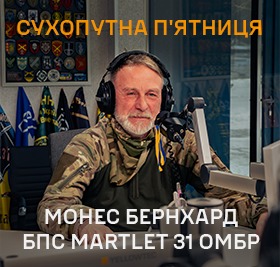
“Ground Forces Friday”: Mones Bernhard from the Martlet unmanned systems unit, 31st Separate Mechanized Brigade. AUDIO
For the first time in the studio — a foreign volunteer, Mones Bernhard, a fighter of the Martlet unmanned systems battalion, 31st Separate Mechanized Brigade.
Read MoreDate: 10 February 2026
“Ground Forces Friday”: Mones Bernhard from the Martlet unmanned systems unit, 31st Separate Mechanized Brigade. AUDIO

As part of the joint project of the 1st Recruitment Center and Bayraktar radio — “Ground Forces Friday” — the story of a foreign volunteer fighting in the ranks of the Ukrainian military aired on air for the first time.
The program's guest — Mones “Ben” Bernhard, a combat driver of the Martlet unmanned systems battalion, 31st Separate Mechanized Brigade named after General-Khorunzhyi Leonid Stupnytskyi. He has lived in Ukraine for 12 years. Before the full-scale war, he volunteered, worked as a hairdresser, and had experience serving in the German army.
From the first months of the invasion, Ben fought in the infantry in the Hostomel and Irpin areas, served in Kyiv air defense, was a medic and infantryman of the 3rd Assault Brigade. During his service he was seriously wounded three times — twice by shrapnel and once during a russian gas attack.


After being wounded and rehabilitating, Ben decided to change his direction of service and joined the Martlet battalion. According to him, the key motivation is the team: “We're brothers, sometimes fathers and sons. This is a real, big family.”
He also notes the unit's international makeup — fighters from Asia, Europe, and other regions of the world — and a high level of internal motivation, held together by responsibility for one another.
Ben separately emphasizes the humane attitude of commanders and medics, while also drawing attention to the difficult conditions of infantry evacuation, which isn't always fast due to combat circumstances.
Mones Bernhard's story is an example of a conscious choice, borderless brotherhood, and service that becomes part of one's life.
Leave your application on the website of the 1st Recruitment Center of the Ground Forces of the Armed Forces of Ukraine
Submit Application
instagram
+380 800 503 696